How Do I Know If My Child Is Ready for Art Classes?
Wondering if your child is ready for art classes? Learn why readiness isn’t about artistic talent or perfect behavior, and how creative experiences help children build confidence, problem-solving skills, resilience, and a lifelong love of learning.
6/17/20264 min read
When parents begin exploring art classes, they often wonder whether their child is ready.
It’s a reasonable question, but after years of working with young artists, we’ve come to believe it’s not quite the right one.
Usually, what parents are really asking is:
Can they sit still long enough?
Are their fine motor skills developed enough?
Can they follow directions?
Will they make something recognizable?
Are they old enough to benefit from the experience?
Our answer may surprise you!
Most children are ready much earlier than their parents think.
In fact, we believe children are born creative and curious. Readiness isn’t about artistic talent or the ability to create a beautiful finished product. It’s about a child’s natural desire to explore the world around them.
At artSPARK, we begin offering studio experiences as soon as children are old enough to sit up, play, and explore alongside a caregiver. Because when children are very young, art isn’t really about art at all.
Early Art Experiences Are About Exploration
When adults think about art, they often think about the finished product. But when young children engage with art, they’re focused on something entirely different.
They’re exploring, experimenting, observing, and discovering.
A toddler squeezing a bottle of glue isn’t just making a mess. They’re learning cause and effect.
What happens if I squeeze harder?
What happens if I use more?
What happens if I spread it with my hands?
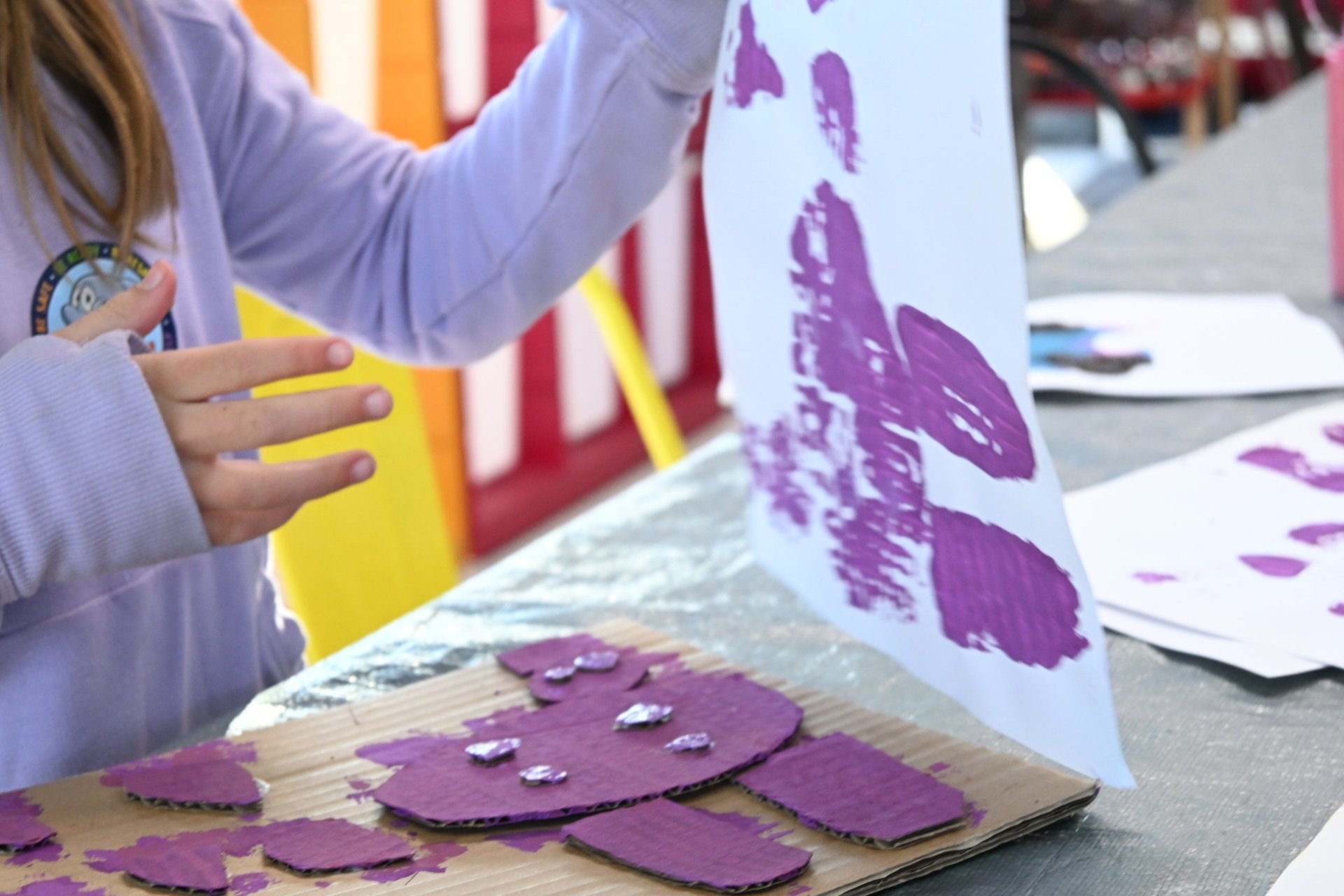
Many adults instinctively want to intervene. We want to conserve supplies, keep things tidy, or guide children toward a particular outcome. But in our studio, we often take a step back instead. We let children explore and observe what happens. Because the learning isn’t in the final product. The learning is in the process.
Those early experiences help children develop fine motor skills, strengthen hand muscles they’ll eventually use for writing, build confidence, and practice making decisions. They also begin developing the habits of curiosity, experimentation, and problem solving that will serve them far beyond the studio.
Creativity Comes Before Skill
One of the biggest misconceptions we encounter is the idea that children need a certain level of ability before they’re ready for art classes. We see it the other way around.
Children develop skills through creating. They don’t need artistic talent to get started.
In fact, one of the most fascinating things to watch is what happens when a child’s imagination begins to outpace their physical abilities. A child can envision a dragon, a castle, a machine, or an entire imaginary world long before they have the motor skills to bring that vision to life.
That gap often creates frustration. And that’s not a problem. It’s part of the learning.
Long before children struggle with perfectionism, they often struggle with frustration. They know what they want to create, but they don’t yet have the skills to make it happen.
The studio provides a safe environment to navigate that challenge.
Children learn to adapt their ideas, try different approaches, solve problems, and persist when things don’t go as planned. They discover that frustration isn’t something to avoid. It’s something they can work through.
Readiness Is More About Willingness Than Ability
Parents often ask what signs I look for when determining whether a child is ready for a class and the truth is, we're rarely evaluating artistic ability.
We're looking for curiosity and a willingness to engage. For a child who wants to explore materials, ideas, and experiences.
Our programs are intentionally designed to be developmentally appropriate, and because we incorporate a high level of agency and autonomy, we’re able to meet children where they are.
Two children can participate in the exact same experience and have completely different outcomes. Both can be successful. One child may spend an hour building an elaborate sculpture. Another may spend that same hour testing what happens when different materials are combined.
Both are learning. Both are creating. Both are exactly where they need to be.
That’s why readiness is often much more about willingness to try than it is about ability.
The Most Important Things Children Gain in the Studio Aren’t Tangible
As strange as it may sound coming from someone who owns an art studio, I don’t believe the most important thing children gain from art classes is art.
The most important things are often invisible.
Children gain confidence. They gain resilience. They learn to collaborate. They learn to observe carefully. To reflect on their choices. They learn to express ideas and navigate uncertainty. They learn to solve problems. And how to persist when something doesn’t work the first time.
These are the habits and mindsets that transfer into every area of life.
At artSPARK, our programming is influenced by the Studio Habits of Mind, a framework developed through research on how artists think and learn. These habits include:
Develop Craft
Engage and Persist
Envision
Express
Observe
Reflect
Stretch and Explore
Understand Art Worlds
While children may not know these habits by name, they practice them every time they enter the studio. They’re learning how to think, not simply what to make.
Sometimes the Best Day in the Studio Produces Nothing to Take Home
This can be one of the hardest ideas for adults to embrace. Sometimes a child spends an entire session experimenting. They test materials. They mix colors. They build something and take it apart. They explore possibilities.
At the end of the experience, there may be nothing worth hanging on the refrigerator. There may not even be a finished project. And yet it may have been one of the most meaningful days of learning they’ve had. Because they learned something about themselves, materials, other people, problem solving, persistence, and about what happens when an idea doesn’t work the first time.
Not every valuable outcome can be framed, photographed, or shared on social media.
Some of the most important learning happens in the process itself.
So, Is My Child Ready for Art Classes?
If your child is curious about the world around them, they’re probably more ready than you think.
If they enjoy exploring, experimenting, observing, building, asking questions, or making choices, they’re ready. If they’re learning how to navigate frustration, communicate ideas, share experiences with others, and build confidence, they’re ready.
The question isn’t really whether your child is ready for art. The question is whether you’re looking for the right outcomes. Because the greatest things children gain in the studio aren’t the paintings they bring home. They’re the confidence, creativity, resilience, curiosity, and ways of thinking they carry with them long after the paint has dried.
info@artsparkcreative.com


2630 W Belleview Ave
Suite 160
Littleton, CO 80123
303-795-7897
© 2024 Ideas Sprout Limited Liability Company. All rights reserved.
6644 Wadsworth Blvd
Arvada, CO 80003
303-284-2630