How Do Art Teachers Handle Different Skill Levels in One Class?
Art classes often include students with very different experience levels, but technical skill is only one part of the creative process. Learn how open-ended prompts, student choice, and the Studio Habits of Mind allow young artists to grow at their own pace while building confidence, persistence, problem-solving skills, and creativity.
6/18/20264 min read
Parents often ask how we handle different skill levels in the same art class.
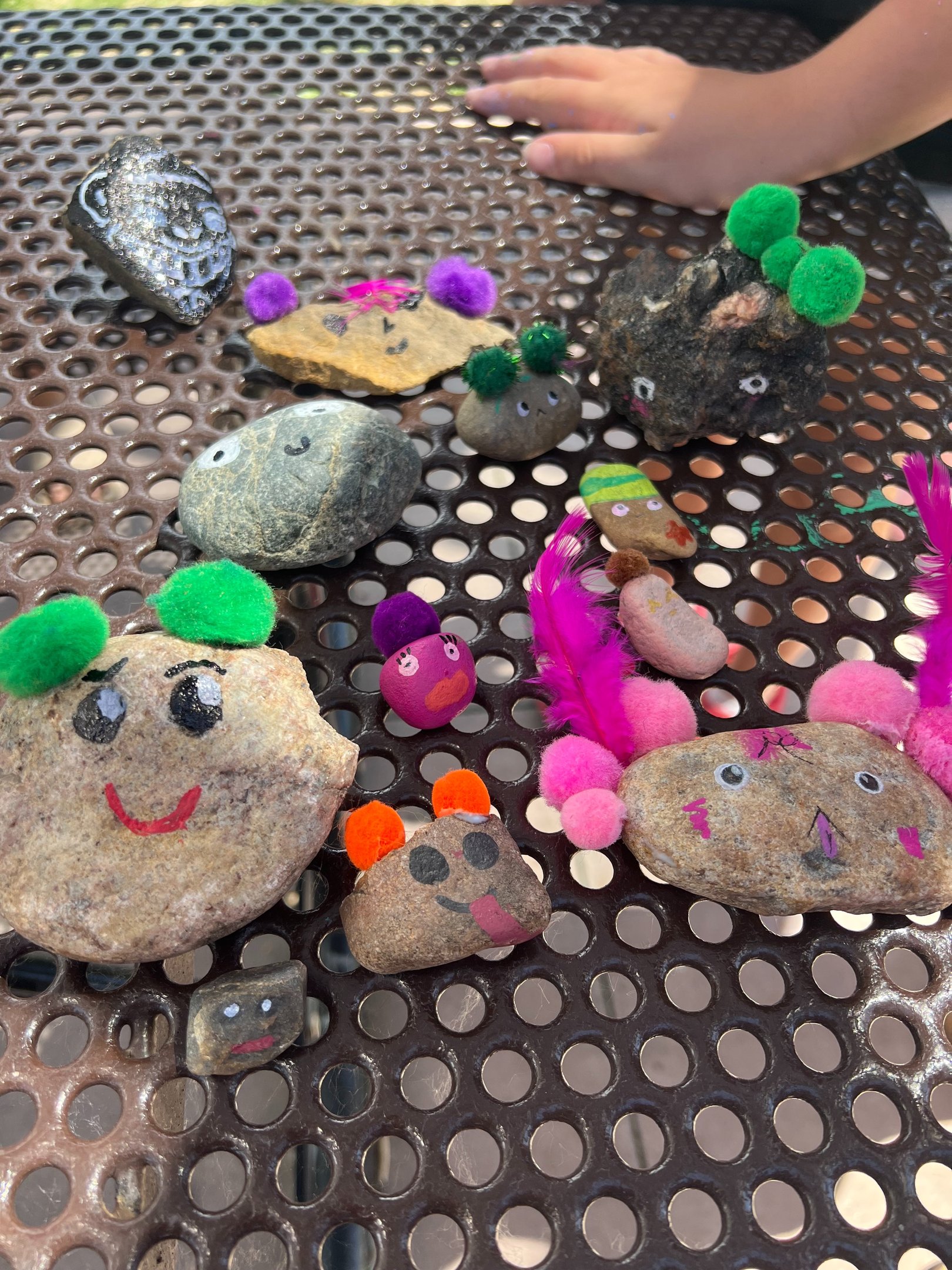
It’s a fair question. In a single class, we might have one student who fills sketchbooks at home, another who hasn’t picked up a paintbrush in months, a student who loves drawing but avoids sculpture, and another who would rather build than draw.
The interesting thing is that skill level is rarely the challenge parents imagine it to be.
At artSPARK, we don’t see creativity as a linear path where every student is moving toward the same destination at the same pace. We see each student as arriving with their own experiences, interests, confidence levels, frustrations, and strengths. Technical ability is only one part of that equation.
In many ways, no two students are ever working at the same level because no two students are trying to accomplish the same thing.
Skill Level Isn’t the Whole Story
When most people think about skill level in art, they think about technical proficiency.
Can the student draw realistically? Do they understand perspective? Can they accurately mix colors? Can they create a polished final piece?
Those things matter, and technical growth certainly happens in our studio. But they’re not the only measures of growth.
One student may spend an entire session learning how to shade a drawing more effectively. Another may spend that same session taking a creative risk by trying a material they’ve never used before. Another may practice persistence by working through frustration rather than abandoning a piece at the first mistake.
All three students are growing.
If we were a technical art school focused primarily on mastery of specific skills, we would likely organize our classes differently. But our approach emphasizes process more so than product.
We’re interested in what students learn through creating, not just what they create.
Every Student Needs Something Different
One of the things we’ve learned over years of teaching is that students often arrive with strong preferences.
Some are passionate about drawing animals. Others only want to work with clay. Some love painting or want to build, invent, or experiment.
Rather than trying to steer students away from those interests, we often use them as an entry point.
If we’re introducing a new medium or process, we might encourage a student to explore that medium through a subject they already love. A student who is hesitant to try printmaking might become interested if they can use it to create dragons. A student who isn’t excited about sculpture may become deeply engaged when they realize they can build a favorite character.
Meeting students where they are creates opportunities for growth that forcing compliance rarely achieves.
This is one reason the Studio Habits of Mind, particularly Engage and Persist and Stretch and Explore, are so important to our teaching philosophy. Growth often happens when students feel safe enough to take one small step beyond what is familiar.
Open-Ended Prompts Create Multiple Entry Points
Many traditional art lessons are designed around a single outcome. Everyone follows the same directions and produces roughly the same project.
Our prompts tend to be much more open-ended.
Students may begin with a common theme, idea, or demonstration, but they often have significant choice in how they interpret that prompt, what materials they use, and what they ultimately create.
This naturally accommodates different experience levels.
A student who is new to drawing can engage with the same concept as a student with years of experience. They simply approach it from different places.
The goal isn’t for every piece to look the same. The goal is for every student to be challenged, engaged, and learning.
Learning Happens in Community
One of the greatest advantages of a mixed-skill environment is that students learn from one another.
They observe different approaches to solving problems. They see how other artists think. They discover techniques, ideas, and perspectives they may not have considered on their own.
Our instructors facilitate discussions around observation and reflection because these conversations help students make sense of their own creative process while learning from others.
Sometimes the most valuable lesson in a class doesn’t come from an instructor demonstration. It comes from watching another student approach the same challenge in a completely different way.
That kind of learning is difficult to replicate when everyone is expected to work in exactly the same way.
What Success Looks Like in an Art Class
Success doesn’t always look the way parents expect.
Some students finish a course with work they can’t wait to display. Others produce pieces they consider masterpieces. Many leave with some unfinished projects, experiments, or work that isn’t particularly polished.
Some of the most meaningful growth happens in the messy middle.
A student who learns to tolerate frustration. Or who takes a creative risk. A student who discovers a new material they enjoy and who develops the confidence to share an idea. Or a student who realizes they are capable of more than they thought.
Those outcomes don’t always fit neatly on a wall, but they often have a lasting impact.
What We Want Parents to Know
If you’re worried your child isn’t “good enough” for an art class, you’re probably focusing on the wrong thing.
Everyone is creative. Everyone benefits from art making and play. And everyone can learn from a studio environment.
The real question isn’t whether a student has enough artistic skill to participate, but whether they’re willing to engage with the process.
Art making gives students opportunities to practice problem solving, observation, reflection, risk taking, collaboration, persistence, and exploration. Often they’re developing these skills without even realizing it.
That’s one of the reasons we believe studio experiences are so powerful.
The goal isn’t for every student to produce the same outcome.
The goal is for every student to leave having grown from where they started.
info@artsparkcreative.com


2630 W Belleview Ave
Suite 160
Littleton, CO 80123
303-795-7897
© 2024 Ideas Sprout Limited Liability Company. All rights reserved.
6644 Wadsworth Blvd
Arvada, CO 80003
303-284-2630